

















BANDA ACEH/Tribuneindonesia.com
Although floodwaters in several parts of Aceh have receded, post-disaster recovery challenges continue to weigh heavily on affected communities. Thick layers of mud remain in residential areas, access to clean water is still limited, public facilities have suffered damage, and environmental clean-up efforts remain uneven—clear indicators that the post-flood phase continues to present serious and unresolved issues.
In a number of affected regencies and municipalities, residents report that recovery has been slow and has yet to reach all areas equitably. Several villages continue to face shortages of logistics and basic infrastructure, while social and economic activities have not fully resumed.
These conditions have intensified public scrutiny of the performance of the Aceh Disaster Management Agency (BPBA), particularly in its handling of post-disaster rehabilitation and recovery. Various elements of civil society observe that disaster management efforts remain largely concentrated on the emergency response phase, while the equally critical post-disaster phase has not been managed in a systematic, integrated, and sustainable manner.
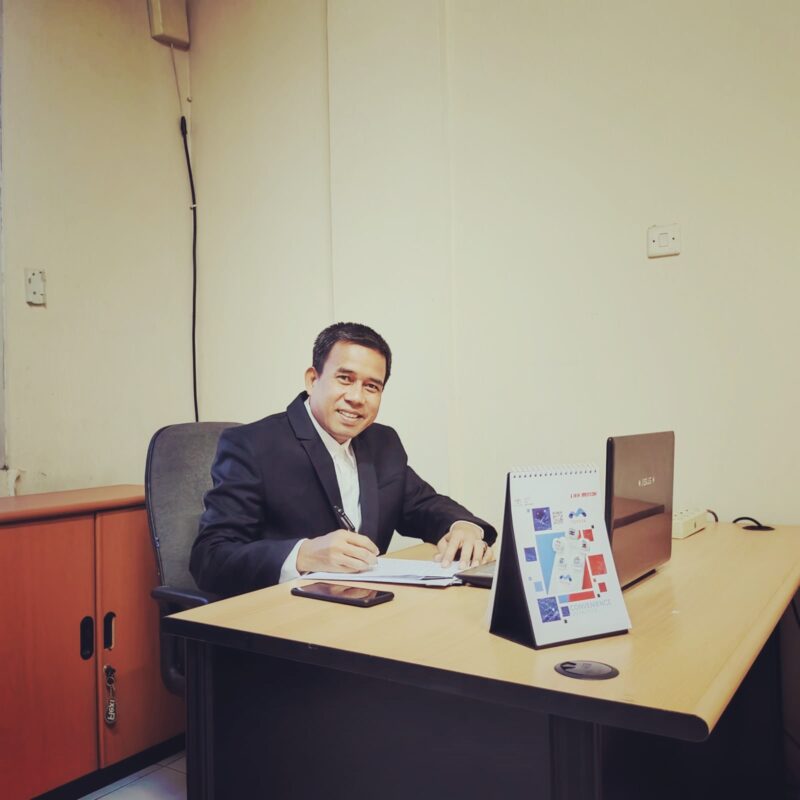
The Chairman of Relawan Peduli Rakyat Lintas Batas, Arizal Mahdi—who has been actively assisting disaster-affected communities across Aceh—emphasised that the post-flood phase is the most decisive period for people’s lives. He stated that a disaster does not end when the water subsides; rather, the post-flood phase represents the true test of the state’s presence. According to him, delays in recovery will only prolong the suffering of the people.
Arizal stressed that the concerns raised are not intended to assign blame, but rather stem from a sense of humanitarian responsibility and the need to ensure that recovery efforts genuinely serve affected communities.
From the emergency response period through to the post-flood phase, Relawan Peduli Rakyat Lintas Batas has been directly involved in distributing aid, assisting affected residents, and cleaning residential areas in several locations that have not yet been fully reached by government interventions.
Beyond the slow pace of recovery, Arizal also drew attention to clean water provision programmes, particularly the construction of bore wells for disaster-affected communities. He reported receiving information from the field suggesting an alleged requirement to allocate approximately 15 per cent of each bore well project—once ready for implementation—to certain relevant agencies.
He clarified that this information does not constitute an accusation, but rather an open question that requires a transparent and accountable response. Should such a requirement exist, he argued, the public has the right to understand its legal basis and implementation mechanism, as it directly concerns the use of public funds and the community’s fundamental right to access clean water.
He further noted that in disaster situations, recovery programmes must adhere to humanitarian emergency principles—speed, integrity, and prioritisation of the people’s needs—without additional burdens that could hinder the delivery of basic services.
Arizal also urged BPBA and related institutions to provide open and clear explanations to the public in order to address information circulating on the ground and to maintain public trust in government institutions.
According to him, delays or obstacles in bore well construction have a direct and immediate impact on daily life, particularly for women, children, and the elderly, who continue to struggle to access clean water in the aftermath of the disaster.
Public scrutiny of post-disaster management intensified after the Aceh Government acknowledged that more than IDR 21 billion in unspent Unexpected Expenditure (Belanja Tidak Terduga/BTT) funds for the 2025 fiscal year had been returned to the regional treasury. These funds are planned to be reallocated in the 2026 fiscal year, raising public questions regarding the effectiveness of disaster budget planning and absorption.
Aceh Government spokesperson Muhammad MTA stated that the total allocation of BTT funds for disaster management in 2025 amounted to IDR 80,973,612,274, including IDR 20 billion in assistance from the President. Of this total, IDR 71,490,612,745 had been disbursed to several Aceh Regional Work Units (SKPA).
The funds were allocated to various institutions, including the Health Office, BPBA, the Irrigation Office, the Housing and Settlement Office, the Civil Service Police Unit and Wilayatul Hisbah (Satpol PP and WH), the Communication, Informatics and Cipher Agency, the Public Works and Spatial Planning Office, the Livestock Office, and the Transportation Office.
However, the Aceh Government explained that not all disbursed funds could be fully realised. Limited time for budget implementation and field conditions that could not be executed effectively and efficiently were cited as reasons for returning the funds to the regional treasury.
Despite the various efforts undertaken, conditions on the ground indicate that many communities are still awaiting more comprehensive and equitable recovery. This has fuelled calls for the Aceh Government and BPBA to conduct a thorough evaluation of disaster governance, particularly during the post-disaster rehabilitation and recovery phase.
Arizal reaffirmed that the critical stance he has taken is purely grounded in humanitarian concern and direct field experience, rather than political interests or affiliations with any particular group.
He concluded by emphasising that volunteers seek nothing more than honesty, transparency, and genuine alignment with the interests of the people—because in every disaster, those who suffer the most are often those with the weakest voices.
MH