













BANDA ACEH/Tribuneindonesia.com
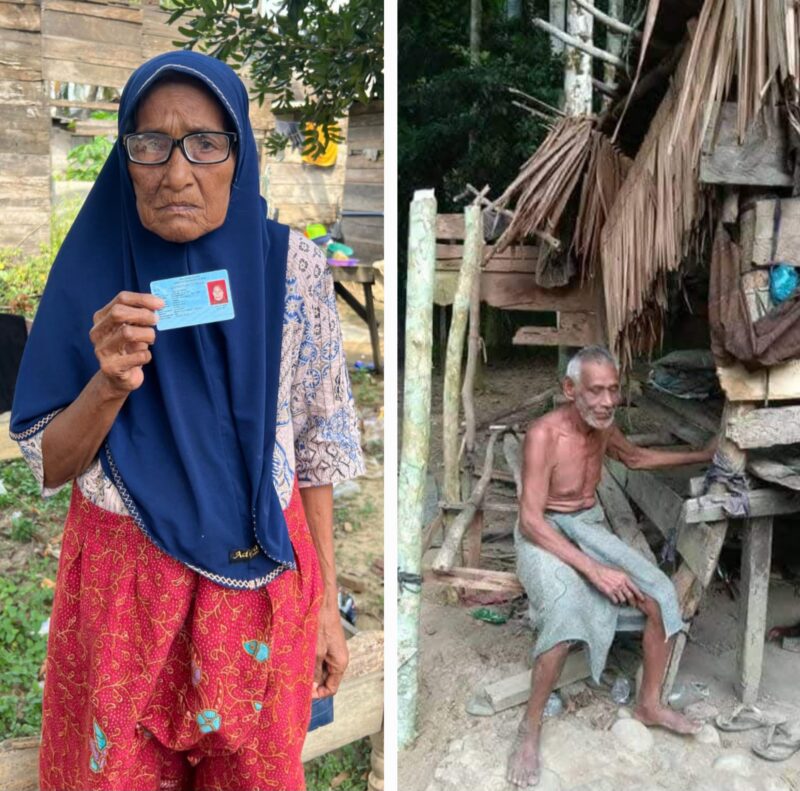
The Chairman of Relawan Peduli Rakyat Lintas Batas, Arizal Mahdi, has issued a strong warning to the Aceh Government over what he describes as an increasingly complex and structurally entrenched socio-economic crisis affecting the people of Aceh. He argues that rising unemployment, the mass exodus of young people, prolonged poverty, increasing divorce rates, growing criminality, and weak budget transparency have converged into a multidimensional crisis that threatens social stability, human dignity, and the future of Aceh’s next generation.
According to Arizal, Aceh does not suffer from a lack of natural or fiscal resources. Instead, the province faces a serious failure in development governance, policy direction, and the state’s commitment to meeting the basic needs of its people.
“When people lose their jobs, families collapse under economic pressure. Divorce rates rise, crime and theft become survival strategies, and poverty tightens its grip,” Arizal said. “These are not merely statistical figures — they represent real human suffering experienced daily by the people of Aceh.”
He highlighted the large-scale migration of Acehnese youth to major cities and overseas as a clear indicator of the state’s absence in providing decent and dignified employment opportunities in their own homeland.
“Aceh is slowly becoming a region abandoned by its own generation,” he stated. “A healthy region should be a place people return to in order to build, not a place they are forced to leave simply to survive.”
Statistical Data Reinforces the Social Alarm
Data from the Aceh Provincial Statistics Agency (BPS Aceh) shows that the open unemployment rate in Aceh remains at approximately 5.5–5.6 per cent, with around 140,000 working-age residents still unemployed. More than 60 per cent of Aceh’s workforce remains in the informal sector, lacking stable income security and adequate social protection. These figures underscore the structural nature of Aceh’s employment challenges rather than short-term economic fluctuations.
Meanwhile, although the agriculture, forestry, and fisheries sector absorbs around 38 per cent of the workforce, it remains dominated by upstream activities with limited downstream industrial support. As a result, economic value-added, quality employment opportunities, and broader welfare gains are not retained in Aceh, but instead enjoyed by other regions and countries.
Large Funds, Minimal Social Impact
Arizal also drew attention to the substantial Special Autonomy (Otsus) funds that Aceh has received over many years, which he argues have not translated into tangible improvements in public welfare.
“Aceh receives significant funding, yet its people remain poor,” he said. “This is not merely a technical issue — it is a moral and political question about policy priorities and whether public budgets genuinely benefit society.”
He further criticised the Aceh Government for its lack of transparency in budget management, which he believes has directly eroded public trust and restricted meaningful public oversight.
“Without budget transparency, there can be no development justice,” Arizal stressed. “The people have the right to know where their money goes and why social suffering continues to repeat itself year after year.”
Downstream Industrialisation and Modern Food Sectors as the Way Forward
Arizal asserted that strengthening downstream industrialisation, alongside the development of modern, technology-based agriculture, fisheries, and livestock sectors, represents the most rational, sustainable, and dignified pathway to breaking the cycle of poverty, reducing crime, and safeguarding Aceh’s future generations.
He believes these sectors possess significant capacity to create decent employment, encourage Acehnese youth to return and build their homeland, and establish economic self-reliance — provided they are supported by bold, transparent, and people-centred policies.
“Aceh does not need promises,” Arizal concluded. “Aceh needs courage, honesty, and real political commitment. If this crisis continues to be ignored, social suffering will be inherited by the next generation.”
Relawan Peduli Rakyat Lintas Batas emphasised that comprehensive budget governance reform, policy transparency, and a strategic focus on high value-added real sectors are absolute prerequisites for restoring public hope and safeguarding Aceh’s dignity in the future.
As of the time of publication, the Aceh Government has not issued an official response to the criticisms and assessments raised.
Detik Peristiwa