














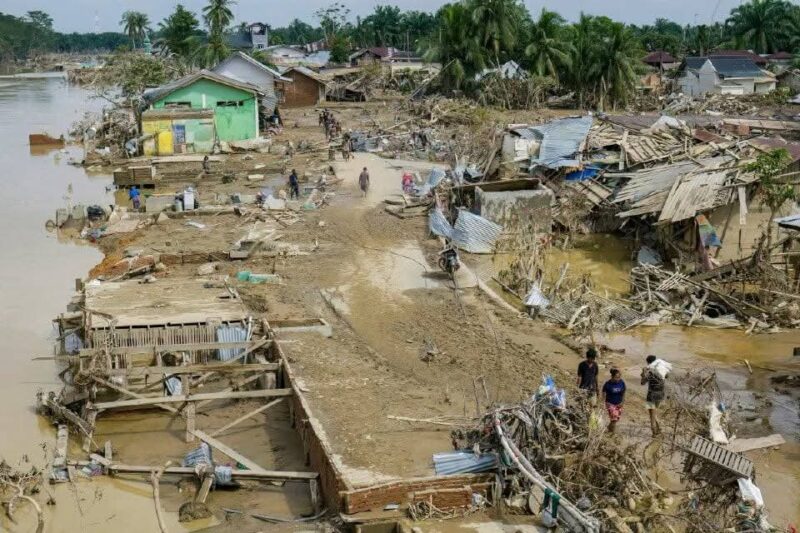
Aceh/Tribuneindonesia.com
Indonesia’s refusal of international aid amid devastating floods sparks global alarm
As floodwaters submerge Aceh, North Sumatra, and West Sumatra, Indonesia is confronting not only a major humanitarian disaster, but a moment of reckoning that is drawing international scrutiny. Entire neighbourhoods have been swept away, livelihoods erased, and thousands of families forced into displacement. Yet amid the devastation, a single decision has come to dominate global concern: the Indonesian government’s refusal to accept international humanitarian assistance.
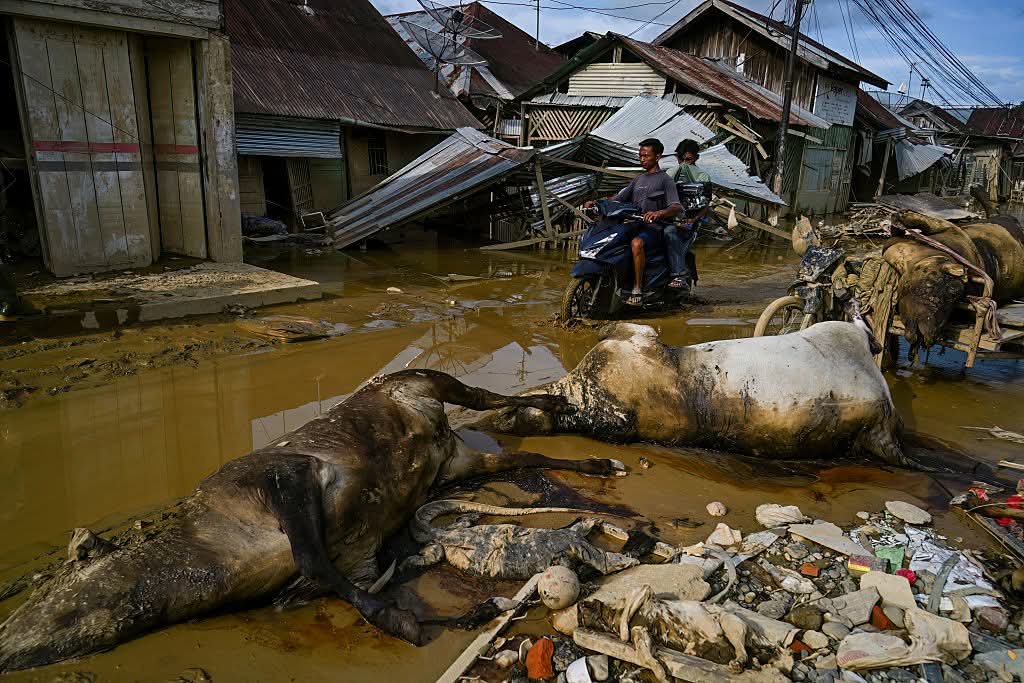
Natural disasters reduce governance to its most basic duty — the protection of human life. When that duty collides with political symbolism, the cost is not borne by ministers or officials, but by those crammed into overcrowded evacuation centres, drinking unsafe water, and waiting days for medical treatment that may never arrive.
The government has defended its stance by invoking national sovereignty. In principle, sovereignty is a legitimate concern. In practice, its use as a justification to turn away life-saving assistance while citizens endure prolonged suffering has alarmed humanitarian observers. Sovereignty, critics argue, derives its legitimacy from service to the people — not from the appearance of self-reliance at any human cost.
Across the world, states routinely accept international aid in the aftermath of large-scale disasters without forfeiting dignity or independence. From earthquakes to pandemics, cooperation has long been recognised as both pragmatic and ethical. Floodwaters do not respect borders, and compassion, many argue, should not be halted by them either.
On the ground, the limits of Indonesia’s domestic response are becoming increasingly visible. Destroyed roads and bridges have isolated entire communities. Aid distribution remains uneven. Supply chains are under strain, particularly in remote and rural areas. Volunteers and local organisations continue to work around the clock, but goodwill cannot replace capacity. In these conditions, rejecting additional humanitarian support does not project strength — it extends vulnerability.
The floods have also exposed deeper structural failures that long predate this crisis. Environmental degradation, weak land-use governance, and the steady erosion of natural buffers have left vast areas of Aceh, North Sumatra, and West Sumatra acutely exposed to extreme weather. Heavy rainfall may trigger flooding, but policy choices determine the scale of its destruction. Without serious reform, disaster response will remain reactive rather than preventative.
Speaking from the front lines of relief efforts, Arizal Mahdi, Chairman of Relawan Peduli Rakyat Lintas Batas, says the crisis reveals a dangerous disconnect between political decision-making and human reality.
“Our principle is simple,” he said. “Humanitarian aid must be guided solely by human need, not by political calculation. When people are suffering, help must be allowed to reach them without delay.”
History lends added weight to the current crisis, particularly in Aceh. Decades of perceived marginalisation and unfulfilled commitments have left a lingering sensitivity to neglect. When disaster strikes and assistance is refused, it reinforces a perception — perilous for any democracy — that some regions are expected to endure hardship more quietly than others.
Leadership in times of catastrophe, analysts note, is not measured by defiance, but by discernment. It is shown in the willingness to prioritise lives over rhetoric, solutions over symbolism. Accepting help when it is urgently needed is not an admission of failure; it is an affirmation of responsibility.
As climate-driven disasters intensify worldwide, governments face a stark choice. They can cling to rigid interpretations of sovereignty, or recognise that global solidarity is not its enemy, but its moral companion.
For families still waiting for food, medicine, and shelter in Aceh, North Sumatra, and West Sumatra, this debate is not theoretical. It is immediate, human, and unforgiving. Sovereignty has meaning only insofar as it protects the people it claims to represent.